Skip to content
Screenplay Ink

Write the screenplay.
Run the film.

One living screenplay carries your film from the first line to the final cut. Writing, pitching, planning, the shoot and the edit all read from the same page.

1.

EXT. VAJRAKOTA RAMPARTS - DAWN

Rain hammers the black stone. Four thousand soldiers hold their breath.

MRINALINI, in battered armour, climbs onto the parapet.

MRINALINI

(to the army)

This fortress remembers its queen.

Lightning. Beyond the walls, the enemy host stretches to the horizon.

SENAPATI VIKRAM, grey-bearded, a scar through one eye, shoulders through the ranks to her side.

SENAPATI VIKRAM

They are ten to our one, Rajkumari. The river camp has not answered since nightfall.

MRINALINI

Then each of us will fight like ten.
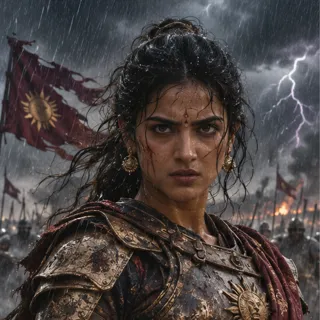
Screenplay 2.0

A screenplay is the source code of cinema.

EXT. VAJRAKOTA RAMPARTS - DAWN

Rain hammers the black stone. Four thousand soldiers hold their breath.

MRINALINI, in battered armour, climbs onto the parapet.

MRINALINI

(to the army)

This fortress remembers its queen.

Lightning. Beyond the walls, the enemy host stretches to the horizon.

  1. DirectionThe climb onto the parapet becomes a three-shot plan.
  2. Production4,000 soldiers: extras, days and cost, budgeted.
  3. CastMrinalini is called for the dawn shoot.
  4. Costume and makeupBattered armour, tracked scene by scene.
  5. Camera and lightingDawn: storm light planned before the shoot.
  6. ArtBlack-stone rampart set and banners, listed.
  7. SoundRain bed, war drums, one held silence.
  8. PostLightning and the enemy host go to VFX.

Change the page, and every department knows.

From first thought to final cut.

One screenplay. An entire connected filmmaking workflow.

Stage 1 of 7, idea

It starts as one line.

Put the logline down in Prewrite. From here on, everything you add belongs to the same story.

Start with one line. Leave with a whole story.

Nine connected studios take an idea all the way to scene cards. Change a character in one, and the plot, the arcs and the script already know.

Showing the Editor, with sample text.

A picture of the app with sample text from our sample film, Vajrakota. Pick a studio to see it.

Watch the real studios at work.

Find the one sentence your film stands on.

Real screen recording from Screenplay Ink.

Type it. Speak it. Ink it.

However the scene arrives, it lands on the page already formatted.

Type

Tab and Enter do the formatting. The page shows you which element comes next.

Real screen recording from Screenplay Ink.

Speak

Dictate in ten Indian languages and English. Headings, names and dialogue format themselves as you talk. Works in Chrome and Edge.

A dramatised clip made with AI, not a recording of the product.

Ink

Write by hand in the Screenplay Ink workbook with the smart pen, or photograph your pages. Your handwriting becomes a formatted scene.

One line. Every language your audience speaks.

This fortress remembers its queen.

Write in your own script, transliterate as you type, and translate a draft between all 22 of these languages. Indic fonts are fitted to the screenplay page, so page counts stay true.

The Indian two-column layout is one switch away, and nothing is lost switching back.

EXT. VAJRAKOTA RAMPARTS - DAWN

Rain hammers the black stone. Four thousand soldiers hold their breath.

MRINALINI climbs onto the parapet, a torn banner in her fist.

MRINALINI

This fortress remembers its queen.

Lightning. Beyond the walls, the enemy host stretches to the horizon.

SENAPATI VIKRAM

They are ten to our one, Rajkumari.

MRINALINI

Then each of us will fight like ten.

Below, war drums begin. Slow. Patient. Enemy elephants lumber out of the mist, siege towers lashed to their backs.

Mrinalini unrolls the torn banner: the thunderbolt of Vajrakota, burned black at the edges.

Twenty-two formats. Each with its own room.

A feature, a series, a stage play, a podcast, a novel, a game. The editor changes its elements to fit, and each format brings the planning room it needs.

Feature Film. The full set of story studios.

Real screen recording from Screenplay Ink.

AJA answers from your Living Document.

Meet AJA, pronounced “Aajha”. Everything you build stays together and stays current, so when you ask AJA a question, it has read the whole story, not only the page you are on.

  • The scriptevery scene, as it stands now
  • Characterswants, wounds, relationships
  • Theme and worldwhat the story is about, and where
  • Plot and arcsevery beat and storyline
  • Scene cardsthe board behind the draft
  • Team chatwhen someone asks @AJA
  • Meeting notesfrom the calls you switch on
An animation of AJA, the character.

What changes for Mrinalini on the ramparts?

She stops asking for the throne and starts commanding it. Her vow to her father in scene 4 pays off here, so let the army answer before she finishes the line.

An example of the kind of answer AJA gives. You decide what goes on the page.

AJA Engine runs with the plan.

The production copilot. Ask in plain words. It reads and works across the breakdown, schedule, budget, call sheets, cast and locations, with about 120 tools, and brings every change to you as a card.

An animation of AJA Engine, the character.
AJA Engine

The producer asks: Rain is forecast on Day 14. Move the rampart scene and fix everything it touches.

    0 of 4 applied
    • Schedule
    • Call sheet
    • Budget
    • Cast
    • Email waits for you

    A sample on Vajrakota. In the Writer app these cards change the real schedule, call sheets and budget, and every applied change keeps an Undo. Here nothing is saved or sent.

    Write together. Talk it through. Keep every word.

    • One script, everyone in it. Co-write live, see who is on which scene, and give collaborators edit, suggest or view rights.
    • Calls with the page under the faces. Read along follows whoever is speaking. Recorded calls come back as notes with decisions and to-dos, in Hindi, English and other Indian languages.
    • AJA in the room. Ask @AJA in the team chat and it answers about the scene you are on.
    • Nothing gets lost. Revision colours, locked pages, tracked changes and a full draft history.

    Know what the draft does to an audience.

    The NeuroScript Suite reads the screenplay the way a room full of people would watch the film, shows you where they lean in and where they drift, and builds every note, shot and sound cue on that reading.

    10 of 66 seats leaning in

    Scene 7 of 123.4

    The siege council

    • Being swept into the story3.6
    • Caring about the people4.8
    • Conflict3.2
    • Learning without being told2.4
    • Guessing what comes next3.0

    Tells instead of shows: Vikram explains what the audience could have seen.

    Scenes 7 and 8: the siege council loses the room.

    An illustration with sample numbers, showing five of the fourteen dimensions. Scores are an AI reading of the script, a guide for your judgement and not a prediction of how an audience will respond.

    One reading of the script. Nine tools built on it.

    NeuroScript reads your screenplay scene by scene, in the order an audience meets it. Every tool works from that one reading, so a note, a shot and a sound cue all point back to the line they came from.

    EXT. VAJRAKOTA RAMPARTS - DAWN

    Rain hammers the black stone. Four thousand soldiers hold their breath.

    MRINALINI, in battered armour, climbs onto the parapet.

    MRINALINI

    (to the army)

    This fortress remembers its queen.

    Lightning. Beyond the walls, the enemy host stretches to the horizon.

    SENAPATI VIKRAM, grey-bearded, a scar through one eye, shoulders through the ranks to her side.

    SENAPATI VIKRAM

    They are ten to our one, Rajkumari. The river camp has not answered since nightfall.

    MRINALINI

    Then each of us will fight like ten.
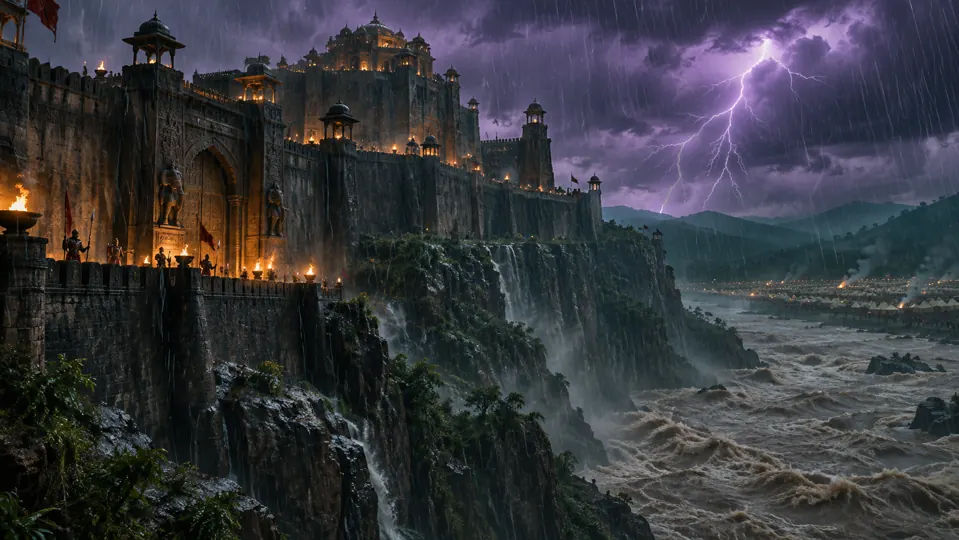
    Sample page and illustrative numbers from the film Vajrakota.See the NeuroScript Suite

    Seal the draft. Then take it to the room.

    Sample

    Certificate of Registration of a Screenplay

    ScriptBloc

    by Screenplay Ink

    Screenplay title

    Vajrakota

    The Fortress of Thunder. Screenplay

    Author name

    A sample writer

    Certificate number

    SB-2026-SAMPLE

    Type of work

    Screenplay

    Registration date

    November 16, 2026

    03:45:00 (UTC)

    Verify this certificate at:

    screenplayink.com/verify-script/SB-2026-SAMPLE

    Blockchain transaction data

    Certificate fingerprint (SHA-256 of the claim)

    8307c89635ccc066af8920bc4574e9de7b3d0048ad878e1e409505868261fe88

    Recorded on

    Base (Ethereum layer 2), block 00000000

    Timestamped in

    Bitcoin, block 000000 (OpenTimestamps)

    Script fingerprint (SHA-256 of its text)

    80df1b0908c6466068530790004aaa86ed39d94eb565f06a5ff7f84fcffce9ea

    Transaction hash

    0xb1201ce1d059071f2485826f9ff4ac89b91ec6a3d338e0cdfd523d783f982e5d

    This certifies that A sample writer, the screenplay’s owner on Screenplay Ink, registered “Vajrakota” on November 16, 2026 at 03:45:00 (UTC).

    ScriptBloc took a SHA-256 fingerprint of the screenplay’s text, then a fingerprint of this certificate’s claim (title, Author, co-writers and the script’s fingerprint). That claim fingerprint is recorded on the Base (Ethereum layer 2) blockchain and timestamped in Bitcoin through OpenTimestamps. Any change to the script or the names gives different fingerprints. The script is never published; the secured draft stays in its draft history.

    This certificate shows that this exact screenplay existed at the time stated. It is not a copyright registration.

    Issued by ScriptBloc, a Screenplay Ink service. Sample, not a real registration.SB-2026-SAMPLE

    A sample certificate. The number, the fingerprints and the QR codes are made up.

    • ScriptBloc proves it was yours first. Your script's fingerprint is registered on the Base blockchain and timestamped on Bitcoin. Only the fingerprint goes on the chain, never the script.
    • Anyone can check it. Each certificate has a public verify page, and the Bitcoin timestamp can be checked with standard open tools.
    • A pitch packet and deck from the script. Choose who it is for and the look, and the slides fill in from your screenplay. AJA can draft the rest, then present full screen or share by link.
    • Readers before buyers. Swap scripts for feedback, and learn from a library of published screenplays.

    Making a pitch for Vajrakota: who it is for, the look, the slides, then the packet and present mode.

    Real screen recording from Screenplay Ink.

    Now run the film.

    The same screenplay. The same scene on the ramparts. This time, it has to be shot.

    Change one line. Watch the whole plan move.

    Breakdown, budget, schedule and call sheet are read from the script, not retyped from it. Tap any highlighted words on the page and follow the change through every plan.

    1.

    EXT. VAJRAKOTA -

    the black stone. soldiers hold their breath. behind them.

    MRINALINI, in battered armour, .

    MRINALINI

    (to the army)

    This fortress remembers its queen.

    Lightning. Beyond the walls, the enemy host stretches to the horizon.

    SENAPATI VIKRAM, grey-bearded, a scar through one eye, shoulders through the ranks to her side.

    SENAPATI VIKRAM

    They are ten to our one, Rajkumari. The river camp has not answered since nightfall.

    MRINALINI

    Then each of us will fight like ten.
    Seven phrases can change. Each one takes its next value when you tap it.

    Breakdown

    • 4,000 soldiers
    • 12 war elephants
    • Mahouts and vet
    • Rain rig
    • Battered armour
    • Black-stone rampart set
    • Dawn light, 40 minute window
    • Parapet climb, safety line
    • Crowd roar, recorded wild
    • VFX: lightning
    • VFX: enemy host

    Budget for the scene

    ₹3.27 Cr

    Extras
    ₹1.80 Cr
    Animals
    ₹54 L
    Rain and wind
    ₹30 L
    Lighting
    ₹12 L
    Stunts
    ₹4 L
    Set
    ₹30 L
    Music
    ₹1 L
    VFX
    ₹16 L

    Schedule

    3 days

    Dawn windows of about 40 minutes. Turnaround: 11 hours before the next call.

    Call sheet

    3:45 AM

    Crew call. Safety notes on the sheet:

    • Water
    • Work at height
    • Animals on set
    • Crowd marshals

    Shot list and storyboard

    19 shots

    One storyboard frame for every lined shot: 19 frames.

    VFX

    8 shots

    6 enemy host, 2 lightning.

    Departments affected

    Change something on the page to see who hears about it.

    • Direction
    • Production
    • Cast
    • Costume and makeup
    • Camera and lighting
    • Art
    • Sound
    • Special effects
    • Stunts
    • Animals
    • VFX
    • Music

    An interactive illustration with sample numbers, not a quote.

    Select words on the script and tag them: extras, animals, wardrobe, props, effects. The summary builds itself.

    Real screen recording from Screenplay Ink.

    See the film before you shoot it.

    Draw each shot over the lines it covers, then set its size, type and movement. Every line becomes a row in the shot list.

    Real screen recording from Screenplay Ink.

    Others give you a chat box. This gives the model the whole film.

    Every shot's prompt is assembled from what your production already knows, then written the way each image or video model expects. You never start from a blank box.

    • Script linesMrinalini climbs onto the parapet. Rain hammers the black stone.
    • The slateWide, crane rising, 35mm
    • CostumeBattered armour, look 7
    • Location lookBlack-stone ramparts, monsoon dawn
    • Storyboard frameUsed as the first frame
    • SoundRain bed, war drums, one held silence
    Subject: Mrinalini, warrior-princess, battered armour (look 7)
    Action: climbs onto the parapet, faces her army
    Setting: black-stone ramparts, monsoon dawn, heavy rain
    Camera: wide, crane rising, 35mm
    Audio: rain bed, war drums, then silence

    Prompts are written for 18 video models. One model generates inside Screenplay Ink today; for the others, copy the prompt or upload your take. A real person's likeness needs a consent record first.

    Each shot carries its storyboard frame, camera, place, sound and prompt. Takes made here or uploaded play back as the scene.

    Real screen recording from Screenplay Ink.

    On the day, everyone has the same page.

    Sample
    Vajrakota
    Crew call3:45AM

    Day 14, Monday, 16 November 2026

    Main unit, Vajrakota: The Fortress of Thunder

    Sample call sheet

    Breakfast

    3:00 AM

    Lunch

    9:45 AM

    Estimated wrap

    1:30 PM

    Sunrise

    5:52 AM

    Sunset

    5:41 PM

    Weather

    Heavy rain through the morning, 24°/19°C

    Basecamp

    Lower courtyard, Vajrakota fort setUnit manager on channel 1

    Crew parking

    North field, gate 3Shuttles every 10 minutes

    Production office

    Thunderline Pictures, Stage 4Open from 2:00 AM

    Nearest hospital

    Meghgiri General HospitalFort Road, Meghgiri, 12 km (an invented hospital)

    From the AD

    The dawn window is about 40 minutes. Rehearse in the dark, roll at first light. Rain towers run with the real rain, so dress for water all day.

    Scenes

    2 scenes, 1 5/8 pages
    ScSetCastExtrasPages
    1EXT DAWN

    VAJRAKOTA RAMPARTS

    Rain. Mrinalini climbs onto the parapet and speaks to the army

    12
    +4,0001 3/8240m
    1AEXT DAWN

    VAJRAKOTA RAMPARTS, ELEPHANT LINE

    Twelve war elephants hold behind the ranks

    2
    +242/860m

    Cast

    3 called
    #Character and actorStatusPickupHair and makeupWardrobeOn setRemarks
    1
    MRINALINI

    Ishani Varrem

    Work1:45 AM2:15 AM3:00 AM4:30 AMBattered armour, look 7. Safety line on the parapet
    2
    SENAPATI VIKRAM

    Devraj Kollur

    Work2:15 AM2:45 AM3:15 AM4:30 AMRain cape between takes
    3
    BHAIRAV

    Arkan Sethi

    HoldWorks tomorrow

    Background

    GroupCountCallWrapHoldingNotes
    Soldiers of Vajrakota4,0002:00 AM12:30 PMLower courtyard tentsArmour and spears. Capes on until the first AD calls
    War elephants with mahouts123:00 AM11:00 AMEast stockadeVet and handlers stay with the line

    Crew

    8 people. Without a time, general crew call.

    Direction

    DirectorMeera Talvane
    First assistant directorKabir Onnoor3:15 AM

    Camera

    Director of photographyRustom Vaikar
    Camera operatorJaya Pennar

    Special effects

    SFX supervisor, rainOmkar Dhillan2:00 AM
    Rain tower operatorSana Quereshi2:00 AM

    Stunts and animals

    Stunt coordinatorViren Achrekar3:00 AM
    Animal coordinatorLeela Mankotia2:30 AM

    Safety

    Safety officer

    Farhan DelwarOn channel 1

    Safety meeting

    3:30 AM

    Emergency

    Set medic and ambulance on standby at basecamp

    Permit

    Granted, VF-2026-014

    Rain rig all morning: non-slip footwear, towels and a warm-up tent at basecamp. Elephants: stay behind the marked line. Parapet: harness and safety line for every take.

    Advance schedule

    Day 15, Tuesday, 17 November 2026
    2EXT DAY

    VAJRAKOTA RAMPARTS

    First clear light. Plates for the enemy host; Vikram readies the line

    12
    +4006/8150m

    Cast 1, 2. Rain forecast to clear by 6:00 AM. 400 soldiers, no elephants.

    Vajrakota, Day 14. A sample: the people, places and numbers are invented.Page 1 of 1Made with Screenplay Ink

    AJA Engine suggests a change

    Move the rampart scene from Day 14 to Day 15. Real rain is forecast until 9 AM on Day 14, and the rain rig needs a dry sky to match takes.

    Nothing changes until you approve.
    • Call sheets that fill themselves. Weather, sunrise, the nearest emergency room and safety notes come in from the schedule and the breakdown.
    • Sent to each person. Everyone gets the PDF and a personal link to confirm, check in and see their days.
    • Daily reports from the call sheet. Check-in times, overtime and meal breaks are tracked against union rules.

    The day's scenes arrive from the schedule. Set the times, walk the sections, and check the preview before anything is sent.

    Real screen recording from Screenplay Ink.

    Run post like the production office it is.

    Camera cards, dailies, release versions and deliveries sit in one place, and nothing moves forward without the evidence behind it.

    Real screen recording from Screenplay Ink, with sample data.
    • Cards leave the set only when it's safe. A card is released after two copies are checked against its checksum, with who holds each one.
    • Every version signs off on its own. Telugu theatrical, Hindi, OTT and festival cuts each carry their own director, producer, legal and mastering approvals.
    • Delivered means accepted. Sent, received and accepted stay separate, so a package is done only when the recipient says so.

    Cut it together, in the same place it was written.

    Takes logged against the script go straight onto the timeline.

    Real screen recording from Screenplay Ink.
    • An edit room for the whole team. Several editors cut the same timeline at once, from the takes logged against the script.
    • Notes on the exact frame. Review comments pin to timecode on named versions.
    • Grade and mix in the same room. Lift, gamma and gain wheels, curves, LUTs and scopes for colour; a mixer with buses for sound.
    • Plays well with your finishing tools. Hand off as EDL, FCPXML or OTIO, or export an MP4 straight from the browser.

    And the credits write themselves.

    Cast, crew, music and locations flow into the Credits Generator. Names and billing are checked before every export.

    Your role. A connected view.

    Each person on a film carries a different responsibility. Find yours, and what the screenplay gives it.

    Writing

    • ScreenwritersA formatting-aware editor in 22 formats, from first logline to locked draft.
    • Co-writersWrite the same page live, with comments and video calls beside the script.
    • Script readersRead scripts and send notes from the Feedback workspace.
    • Script doctors and consultantsA NeuroScript report reads the draft on 14 dimensions before you write your notes.
    • PlaywrightsStage-play format, and a Stage Room for cast, French scenes and the rehearsal packet.
    • PodcastersPodcast and audio drama formats, with run of show, guests and sponsors planned.
    • AuthorsBook and short story formats, with chapters and submissions in the Book Room.
    • LyricistsA lyrics format, with the brief, singers and versions kept in the Song Room.
    • Game writersA game script format, with flow, logic and playtests in the Game Room.

    Direction and camera

    • DirectorsLined scripts, shot lists, storyboards and staging, all read from the scene.
    • Assistant directorsStripboard schedule, call sheets and daily reports, built from the breakdown.
    • CinematographersCamera setups per slate, and a 3D staging view to plan them in.
    • Storyboard artistsFrames sit against the scene and shot they belong to.
    • GaffersLighting plots drawn in Staging, and a lighting list fed by the breakdown.

    Production

    • ProducersBudget, schedule and crew kept in step with the script as it changes.
    • Line producersA budget that sits beside the breakdown and schedule it is costed from.
    • Production managersCrew, onboarding, check-ins and announcements in one place.
    • SchedulersShoot days built from the script's scenes, with a day-out-of-days report.
    • Budget and accountsExpenses logged against the budget, each approved before it is paid.
    • CastingA casting desk per character, with self-tapes sent in by link.
    • LocationsA locations page for every place you shoot, with release forms ready to print.
    • Art departmentProps, set dressing and vehicles listed from the breakdown.
    • Costume and makeupCostumes and looks tracked per character, fed by the breakdown.
    • SoundA sound list per scene: ambience, effects, ADR and wild tracks.

    Post

    • EditorsAn edit room in the browser, with the script's takes beside the timeline.
    • ColouristsA colour panel with scopes and LUTs in the edit room.
    • Sound designersSound and ADR tracked through post, next to the cut.
    • VFXVFX shots listed from the breakdown and followed through post.

    Organisations

    • Studios and streamersA Series Room for the season, its episodes and continuity.
    • Production housesEvery project's script, plan and post on the same backbone.
    • Film schoolsSelf-paced lessons, and a script library to study from.
    • Agencies and brandsA two-column AV script and a commercial production desk.

    Start with the story. Grow into the film.

    Writer OS

    For screenwriters

    ₹5,489 / year

    • The editor in all 22 formats
    • Nine prewriting studios and format rooms
    • Dictation, smart pen and handwriting import
    • Translation, transliteration and two-column layout
    • Live co-writing, chat and calls
    • Import and export: Final Draft, Fountain, PDF and more
    • Pitch decks, feedback and the script library
    Create your account

    Director OS

    For directors and their teams

    ₹14,859 / year

    • Everything in Writer OS
    • Script breakdown and production lists
    • Script lining and shot lists
    • Storyboard and the prompt engine
    • Staging in 3D and Diagram Master
    • NeuroShot and NeuroSound planning
    Create your account

    Edu OS

    For film schools

    Priced per student seat

    • Writer OS and Director OS for every student
    • Classes as shared projects, with roles and review
    • Self-paced lessons with certificates
    • The script library to study from
    • Feedback between students and teachers
    • Seats, admin and onboarding for your school
    Get in touch

    Studio OS

    For production houses

    Priced per production

    • Everything in Director OS
    • Schedule, budget and purchase orders
    • Call sheets, crew check-in and daily reports
    • Casting, crew and locations
    • Edit Room, review and the Credits Generator
    • AJA Engine across the production
    Get in touch

    Prices in Indian rupees; GST is added where it applies. AJA and NeuroScript run on AI credits, bought separately. ScriptBloc registrations are charged per script.

    The film changes. The screenplay remembers.

    Create your account